
This is the Golden Record—a testament to human existence etched on a golden disc and sent into space aboard Voyager-1. It's a tiny message in a vast, ever-expanding cosmic ocean, hoping that someday, someone—or something—will discover the dramatic saga of the human race. While the chances of extraterrestrial discovery remain uncertain, one thing is clear: humanity exists to witness, serve, and pass on its story to future generations.
For those unfamiliar, Voyager-1 is the farthest human-made object from Earth, over 24.5 billion kilometres away as of 2024. Its famous image, ‘The Pale Blue Dot,’ is humanity’s first iconic cosmic selfie—our tiny home captured from billions of kilometres away. There are two perspectives to look at the pale blue dot:
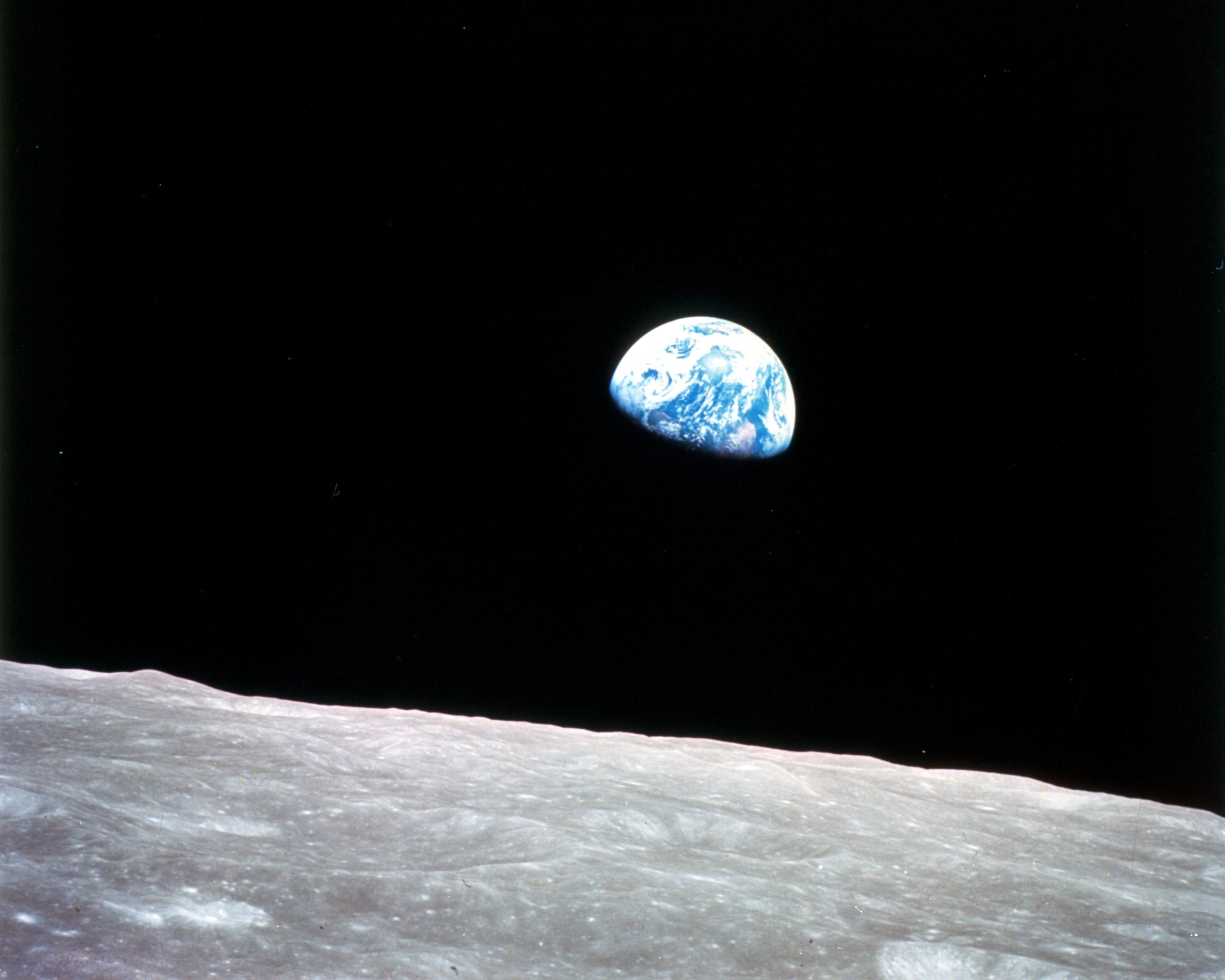
The Cosmic Perspective shifts our mindset from a human-centric view to a cosmic-centric one. It humbles us, dismantling the illusion of human significance in the vastness of the universe, forcing us to confront the objective reality of our existence. The world and lifestyle we’ve constructed make it easy to forget—or worse, never realize—that we are simply another species of animals. The only significant difference between us and other creatures is that we have an evolved brains and they don’t wear fancy clothes.
We've come a long way since the Earth was just oceans, land, and biodiversity. Everything we see, hear, live for, and die for today has been created by us and holds little relevance in the grand scheme of the cosmos. This fragile planet, our entire world, is a mere rock suspended in a void. It grants us the privilege to experience life in all its drama and glory, even though it may be cosmically insignificant. It’s a hard reality to comprehend from our limited vantage point, but it is similar to the depersonalization or the "Overview Effect" one might experience during a near-death event—seeing yourself from the outside for the first time.
Edgar Mitchell, the sixth person to walk on the moon, perfectly captures this realization when he saw Earth from space: ”You develop an instant global consciousness, a people orientation, an intense dissatisfaction with the state of the world, and a compulsion to do something about it. From out there on the moon, international politics look so petty. You want to grab a politician by the scruff of the neck and drag him a quarter of a million miles out and say, ‘Look at that, you son of a bitch.’"
This profound state of awe and self-transcendence is vital for every individual. It reminds us of the fragility of life on Earth and the urgent need for coexistence and well-being here and now—not in the heaven. For a brief moment, our identities—nationality, caste, creed, race, religion, ideologies—fade, leaving only our shared humanity. This perspective ignites curiosity, deepens our consciousness, and promotes mindfulness, compelling us to appreciate the objective reality beyond our limited, subjective lens of life. It encourages us to consider the grander scale of existence, not just through the narrow lens of survival, but as a unified species with shared responsibility.
The Cosmic Perspective represents a fourth-dimensional evolution of the mind, moving from primal instincts to conscious awareness. It encourages us to carefully and practically perceive and deconstruct the world around us, transcending the limitations imposed by our upbringing, beliefs, and social conditioning. Ultimately, it reveals an often-overlooked truth: there’s far more happening in the universe than we can comprehend, and much of it matters more than the small cocoon we’re living in. It reminds us that Earth is our only home—no external help is coming, and no one can save us from ourselves but us.

The Micro Perspective is human-centric. It inflates our sense of significance in the cosmos, making us feel privileged, even entitled, as rulers of the Earth. We no longer view ourselves as animals but as special creatures, or perhaps the chosen ones, destined to walk this planet. This mindset drives conquerors, destroyers, and religious fundamentalists to kill millions over a fraction of land that is barely noticeable from up there. It allows us to exploit nature, kill thousands of whales for oil to lubricate our machines, or flaunt ivory pianos as symbols of status. These actions reflect a micro perspective that is ignorant of the objective truth, trapped within a constrained outlook on the world.
As Neil deGrasse Tyson aptly said, "The Universe is under no obligation to make sense to you." Humans are designed to wonder, comprehend, find patterns and try to figure out the world to make sense out of it and adopt to survive. However, we often become so entrenched in our perceptions that we blur the line between self-constructed and observable realities. The brain, lacks an innate "correction agent" to differentiate between subjective and objective truths. This is the reason we still have some people who are so deeply rooted into the belief of Earth being flat. An outsider might see it as absurd, but realistically the neural pathways in their brains have been constantly fired and wired together to believe in this flat reality.
Like other animals, we too are emotional and social creatures, controlled by a part of our brain, the amygdala, which is responsible for our fight-or-flight responses and tribal instincts. Pair this with the complex human tendency to absorb layers of identities—nationality, religion, ideology—and we create beings willing to kill or die just for their beliefs.
We become so deeply involved and invested in our own identities that we may lose sight of the broader existence beyond our immediate or meager surroundings. While the micro perspective can provide comfort and meaning in a structured world, it falls short when it comes to handling uncertainties of existence.
Let’s begin with a thought experiment: Flip a coin—heads, you win; tails, you lose. Ten people flip coins in a row. Five win, five lose. The five winners flip again; three win, two lose. The three remaining winners flip once more, and now, only one emerges victorious, having flipped heads four times consecutively. This person becomes the story—an improbable winner. But will this emotionally driven, amygdala-guided human process this situation objectively? Likely not. Imagine an ant boasting about how it survived crossing a busy street, dodging cars tyre to bring back food. We call such improbable outcomes "luck" or "coincidence." In essence, anything that falls outside our course of action gets labelled as luck and we surely live in a world where not everything is in our control, so we do need this ‘luck’ thing to make certain things fall on place.
But luck or fate has become an oversimplified and even demeaning concept. We live in a world where the circumstances you're born into—your demographics—largely define the course of your life. The starting line isn't the same for everyone. It's easy for those with some level of affluence or privilege to believe in luck or destiny, but for those in war zones, poverty, or under oppression, attributing their entire lives to their fate is highly disregarding. We live in a world that is indifferent to our beliefs and fate, where a drunk driver responsible for deaths can evade imprisonment and live free, but on the other side, someone can arbitrarily lose their life due to something as trivial as a pothole on the road. Is it fair to attribute such events to the luck or destiny of the victims?
We've witnessed pandemics, world wars, and communal riots, yet no force or morals, ethics and regulations seems to balance good and bad in the world. And even if such a force exists, human insanity often surpasses it because we’re taught everything except being a human. The COVID-19 pandemic forced a re calibration of our collective belief in science. The vaccine worked regardless of whether you believed in science, just as an air plane works regardless of your belief in gravity. Today, the odds of a plane crash are 1 in 12 million, a stark improvement from the 1 in 2 million chance in the 1990s. This reassurance comes at the cost of thousands of lives lost over decades, and the relentless efforts of millions who work daily to improve aviation safety. Human error accounts for 80% of plane crashes, yet it’s the same human ingenuity that continues to save lives. The thin line between human error and progress is what defines our experience of randomness and uncertainty in the world.